- EdTech Tidbits with Lisa
- Posts
- What On Earth Is Career Technical Education?
What On Earth Is Career Technical Education?

Lisa Jones
February 14, 2024

So often when you meet new people one of the most common questions is, “What do you do?” Usually, I start the conversation by saying that I teach middle school Career Technical Education (CTE). This typically results in looks of shock, pity, and then confusion. Let’s be honest, middle schoolers are not always the most charming individuals, but there’s never a dull moment. Eventually, the initial shock of my choice to spend my life with pre-teens wears off. The next question is always, “What on Earth is CTE?”
What Is Career Technical Education?
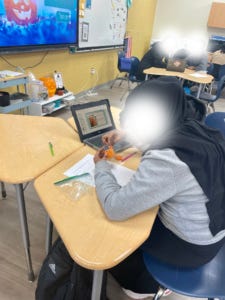
Career and Technical Education encourages students to explore their interests and build skills that will follow them into adulthood. In my school district, in middle school, this includes the electives I teach: Exploring Careers and Engineering. Our middle schools also offer coding, robotics, app development, and medical detective. In high school, CTE includes the more traditional career training programs. The benefit of these programs is that students earn accreditations and certifications in a variety of fields that allow them to be career-ready at graduation.
Why Do Students Need CTE?
I didn’t know it when I started teaching in 2004, but Career Technical Education is my passion. I spent the first part of my career as an Intervention Specialist providing instruction and accommodations for students with a variety of learning disabilities. As I watched my students grow and built relationships with them, I found my mindset shifting.
My goal for students changed from “college for every kid” to “post-secondary plans for every kid.” This might be a controversial statement but I truly believe that traditional 4-year college is not for everyone. Most of the time when I talk to people about this they look at me like I’m an alien. I’m not saying that post-secondary education and training are unnecessary but that education doesn’t have to be a traditional 4-year college.
Real-Life Example
A perfect example of this is a student I’ll call “Lexi”. When I asked her what she wanted to do after high school, she told me she wanted to be a doctor because she loves helping people. However, Lexi also struggled with reading and writing. One of the first things I had Lexi do was research the education and skills a doctor needs to be successful. She was disheartened once she realized she would need 8 more years of post-secondary education and a 5-year residency.
I encouraged her to keep exploring her options in the medical field. She was excited when she realized that she could start as a medical assistant with a certification. Being a medical assistant would allow her to get her foot in the door of the healthcare field. If Lexi hadn’t been encouraged to research her “dream career” of being a doctor as well as alternatives, she could have found herself frustrated with the reality of being a doctor and unfamiliar with other options.
Students need the opportunities to learn about their passions and the possible opportunities that CTE programming provides. They also need the hands-on and real-life experiences these types of programs provide. I cannot wait to share some of these experiences with you in my upcoming blog posts!